


Leading CNC Turning Service Company in China!
Ningbo Kang Ying Health Technology Co., Ltd. is dedicated to the design, development and manufacturing of precision sheet metal. Our products are involved in many fields such as security, IT, automotive, medical, finance, new energy, intelligent health, etc. and are exported to more than 20 countries and regions such as Europe, North America, Japan and Australia.
Professional Technical Team
Our company has a team of engineers specialized in product development, who can skillfully use industrial design software and Chinese and English language, and can exchange design solutions with foreign customers skillfully.
Advance Equipment
The company pays attention to quality control and investment in testing equipment, with perfect parts testing equipment, sound insulation room, push and pull testing equipment, life testing equipment; to ensure that incoming parts, production process parts.
Complete Qualifications
Since its establishment, the company has been awarded ISO9001: 2008 international quality management system, ISO141001: 2015 environmental management system certification, ISO20000; 25001 and 27001. And our R&D department has obtained a total of 30 inventions and new patents.
Strong R&D Capability
We have a professional R&D team, including software and hardware engineers, which can develop and design products independently. We also provide customers with services from design concept to finished products.

CNC machining is an advanced machining technique that typically uses computerized controls and machine tools to accurately remove material from stock parts that are outside of the design and create parts that are close to the final design.

CNC turning is a high-precision, efficient material reduction manufacturing process in which a cutting tool is fixed to the turned workpiece to remove material and obtain the desired part.

CNC drilling is a machining process that utilizes a rotary cutting tool or drill to create round holes in a stationary workpiece, which utilizes computer-automated machines to drill precision threads or holes in surfaces of varying material composition and thickness.

CNC milling is a subtractive manufacturing process that uses a cutting tool mounted on a rotating spindle to selectively remove material from a raw substrate.
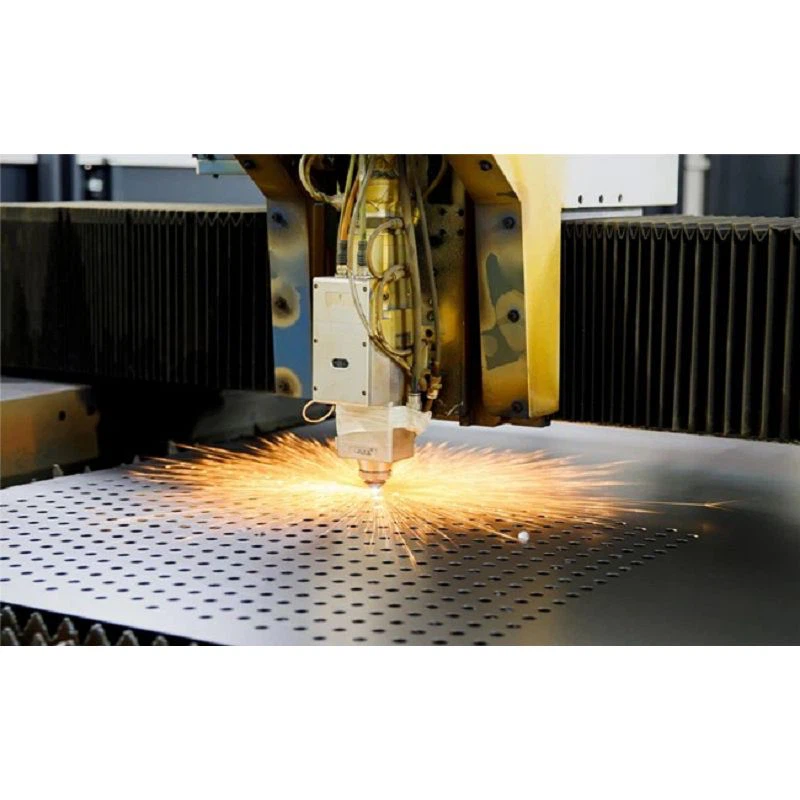
Ningbo Kang Ying Health Technology Co., Ltd offers precise and fast metal laser cutting services for a wide range of industries. Our factory have 4 laser cutting machines, their power are 700W, 1500W, 3000W and 6600W.

Metal Stamping And Punching Service
Ningbo Kang Ying Health Technology Co., Ltd has a range of stamping and punching equipment for in-house production, medium or large deep drawing stampings with the highest level of precision and quality.

We provide high quality metal surface treatment services to improve the aesthetics and functionality of your parts. Ltd monitors the quality of the finish throughout the process to ensure that your custom metal parts and components are of high quality and meet the required specifications for the intended use.

With its different welding lines, Ltd is able to offer its customers a wide range of metal welding processes that can correspond to different materials. Our extensive experience and capabilities can help your company to get the quality welding services it needs, while reducing lead times and production costs.

Metal Centerless Grinding And Polishing
Metal grinding and polishing is a quick, easy and accurate method for finishing tubular metal parts that require tight tolerances. As a professional metalworking service provider, Ningbo Kang Ying Health Technology Co., Ltd can provide high quality polishing and grinding services for your metal fabrication needs.
Introduction to CNC Turning Service
CNC turning produces parts by mounting a blank on a rotating chuck and removing material using stationary cutting tools. This technology is ideal for manufacturing parts with symmetry along their center axis. Turned parts are typically produced faster (and at a lower cost) than milled parts.
What is the Process of Turning?
Turning is the name given to the manufacturing process where bars of raw material is held and rotated at high speed. As the piece rotates, a cutting tool is fed to the piece, which works at the material, cutting away to create the desired shape. Unlike other cutting styles where the cutting tools themselves move and spin, in this case, the workpiece is rotated during the cutting process.
CNC Turning is commonly used for cylindrical shaped workpieces, however, it can be used for square or hexagonal-shaped raw materials. The workpiece is held in place by a "chuck". The "chuck" spins at varying RPMs (rotations per minute).
Unlike a traditional lathe, today's machines are numerically controlled. Often the turning process is under constant supervision and adjustment. Meticulous and exact results are possible due to the lathe being consistently monitored by a computer program. Modern CNC Turning machines have various tools, spindles, and speed capabilities. Additionally, the different sizes and shapes of the cutting tools themselves mean a wide range of geometries are possible. Tubular and circular shapes benefit the most from CNC Turning techniques.
How do CNC Turning Machines work?


Produce the CAD Model
It is through the computer-aided design (CAD) software that the model that the machinist plans to produce is generated. Conversion of the CAD file to a suitable file format (DWG/DXF) and importation of the same to the CNC software follows.
Producing a CAD model can follow several techniques. Some people prefer to use vector cut paths to trace an image. They identify the silhouette of the image and trace it around, ensuring that all the main features are captured. Once saved in the DXF file, the details can then be sent to the CNC software.
Another approach is you convert the image automatically. You first scan the image. After saving it in PDF format, you convert it to a DXF file, ready for importation to the CNC program.
Convert the CAD Model for the CNC Machine
The CNC machine does not recognize the CAD model file as it is. Most CNC machines use a not-so-advanced programming language based on RS-274 or G-code. That the CNC turning machine language cannot read the DXF file format from Autodesk necessitates this step.
But the conversion is not complicated. There are tools for converting the file to readable format, for instance, the Standard for the Exchange of Product Data (STEP). Another tool is the Initial Graphics Exchange Specification (IGES).
If you need the CNC technical drawing, this is the point at which you need to ensure it is available too. Some measurements are not clear from the model, so it is advisable to have a technical drawing on the side. The technical drawing is particularly essential if the model has threads, extraordinary precise tolerance requirements, and special finishing specifications. The machinist may also need the technical drawing for reference purposes.
CNC Milling Machine Preparation
At this point, the model is ready for reproduction in the CNC turning or milling machine. Once you have the input from the rest of the team, it is time to turn your attention to the turning/milling machine. The machine needs prepping up before the manufacturing process can start.
Now, regarding preparing the lathe machine for turning, several things come into focus: The device(s) for holding the workpiece, the cutting tools, the tool turret, the allocation of tool numbers, and the adjustment of the program and machine.
Most importantly, all the activities taken on the CNC milling machine should be in line with the existing organizational policy and health & safety requirements. If there are any potential challenges in operating the machine to remove material, seek the necessary assistance to execute the CNC turning process successfully and safely.
Starting the Turning Process
The CNC machining process follows the following steps more or less.
- Setting up the workpiece on the lathe.
- Selecting and mounting the machine tool in the turning center.
- Programming the lathe using CNC software.
- The workpiece rotates at the specified turning speed and feed rate.
- Replacing the turning tool with a finishing tool to achieve a smooth surface.
Automotive
CNC turning produces everything from gears, shafts, to automobile parts. The process guarantees exceptional precision and consistency, crucial for the smooth operation of automotive components.
Oil and Gas
CNC turning manufactures high-strength components that can withstand extreme pressure and harsh environmental conditions, such as drilling tools, connectors, and more.
Aerospace
Precision, durability, and performance are non-negotiable in the aerospace industry. Hence, CNC turning is indispensable. The creates critical parts like turbine shafts, and control systems.
Industrial Machinery
CNC turning plays a significant role in the manufacturing of industrial machinery components, from large, robust pieces to smaller, high-precision parts.
Agriculture
Farming equipment and machinery components, like shafts, bushings, spindles, and various fittings, are commonly made through CNC turning.

Types of CNC Turning Operations
Turning is a term used to describe a range of different operations that can be performed on a turning center. Listed below are some of the more common types of turning.
Facing
Face turning is the process used to cut a flat surface perpendicular to the workpiece's rotational axis. The tool is mounted into a tool holder that rests on the carriage of the lathe. During the process, the facing tool will feed perpendicularly across the rotational axis of the part. Face turning can be performed as a roughing cut or as a final pass cut.
Drilling
If a hole is required on the rotational axis of the part, a drill is used. In more advanced turning centers, a hole can be drilled in almost any orientation and is not limited to the central axis.
Threading
Threading is the process of cutting threads into a hole or over the outer diameter of a workpiece.
Knurling
Knurling produces a diamond pattern into the outer diameter of a part. This pattern is not produced by cutting, but rather the knurling tool compresses the material into the desired pattern. Knurling is most often used to add grips onto a part.
Turning
The CNC machine turning operation refers to removing material from the outer diameter of the workpiece. Turning can either be performed parallel to the rotational axis of the part or at an angle to create a tapered part.
Boring
After a hole has been drilled it may be necessary to enlarge it. The easiest way to do this is through a boring operation where the cutting tool is fed into an existing hole and removes material from the inner wall of the hole.
Grooving Or Parting
Grooving is typically used to create features like O-ring or circlip grooves and contouring operations. A grooving tool is sometimes also called a parting-off tool and is used to remove the completed part from the workpiece stock.
What are the Possible Shapes With CNC Turning?
It can produce a variety of intricate shapes and sizes, including cylindrical, conical, and spherical, removing the material from the workpiece.
|
Shapes |
Examples |
|
Cylinders |
Straight shapes with a constant diameter, shafts, pipes, tapered cylinders, and other parts. |
|
Cones |
Tool spindles, conical tubes, assemblies components, conical springs, and more. |
|
Spheres |
Bulb bearings, valve seats, spherical joints, and many more. |
|
Internal features |
Holes, threads, grooves, counterbores, countersinks, slots, keyways, fillets, radii, and more. |
Advantages of CNC Turning Service
Accuracy
The CNC turning machine can execute exact measurements and eliminate human mistakes using CAD or CAM files. Experts can deliver incredibly high accuracy using cutting-edge machinery, whether for the production of prototypes or the completion of the entire production cycle. Every cut is precise since the machine being used is programmed. In other words, the final piece in the production run is identical to the first piece.
Flexibility
Turning centers come in various sizes to accommodate your applications' flexibility. The adjustment is rather easy because this machine's tasks are preprogrammed. The operator can finish your component by making the necessary programming adjustments to your CAM program or even build something entirely different. Therefore, you can rely on the same precision CNC machining services company if you need many unique parts.
Safety
Manufacturing firms adhere to strict safety rules and regulations to guarantee complete safety. Since the turning machine is automatic, less labor is required because the operator is only there to monitor the machine. Likewise, the lathe body employs fully enclosed or semi-enclosed protective devices to avoid flying particles from the processed item and lessen harm to the crew.
Faster Results
There is a lower chance of error when tasks specified by programming are carried out on CNC lathes or turning centers. As a result, this machine can finish production more quickly without sacrificing the final output quality. Finally, you can receive the necessary components faster than with other options.
Excellent Tolerance
Manufacturers and engineering experts often turn to CNC turning to produce machined parts with incredibly high tolerance. CNC turning offers an excellent surface finish and high tolerances than most techniques. As a result, manufacturers commonly use this process to add precision rotational features to components whose basic structure has been formed using a different procedure.
Cost Effective
Cost-effectiveness is one benefit that attracts most machining businesses to this process. CNC turning operation helps machining businesses save a great deal of money while offering high-quality products. This is because the process improves scalability, the efficiency of production, and assembly without wasting material.
No High Skill Requirements
CNC turning operation does not require a highly skilled operator to manage the CNC machine. A machinist can complete a course and become certified to operate a CNC turning machine. Consequently, this helps to reduce further costs of production.
Available Materials for CNC Turning
CNC machining processes are compatible with a wide range of materials. However, many of these materials are best machined with a CNC lathe or turning center. Nevertheless, it would help to note that metals are the primary materials used for turning.
- Cast iron
- Alloy steel
- Stainless steel
- Carbon steel
- Zinc
- Aluminum
- Magnesium
- Copper

Other compatible materials include

- Glass
- Wood
- Plastics
- Wax
- Composites
- Ceramics
Nevertheless, it would help to note that these materials require varying turning centers or lathes due to specific requirements such as feed rate and turning speed.
Design Considerations for CNC Turning


Tool Accessibility
Ensure the tool can access all features of the design. Complex profiles might require specialized tools or multi-axis CNC turning machines.
Part Orientation
The part's orientation during the machining process can influence the quality of the finished product, machining time, and surface finish.
Tolerances
The precision necessary for the final part can impact the machining process and its cost. Tighter tolerances often require more complex equipment and slower machining speeds, which can increase production costs.
Feature Size and Type
The size and type of features in your design can affect the final part's machinability and strength. Small features may require specialized tools, and thin sections may be difficult to machine or could weaken the part.
Surface Finish
The desired surface finish can influence machining. Rough finishes are quicker and cheaper, while high-quality finishes might require additional steps and costs.
Our Certificate
The company's research and development department has obtained a total of 30 invention and utility model patents at home and abroad.

Frequently Asked Questions About CNC Turning Service
Q: What is CNC turning services?
Q: What is CNC turning machine introduction?
Q: What is the basic principle of CNC turning process?
Q: What is CNC turning programming?
Q: What are the disadvantages of CNC turning?
Q: Why is CNC turning important?
Q: What is the difference between turning and CNC turning?
Q: Which tool is used for turning on CNC?
Q: What is the difference between CNC turning and milling?
Q: What are the three basic principles to CNC machining?
Q: What is the primary tool material used for CNC turning?
Q: Why CNC is better than lathe?
Q: How accurate is CNC turning?
Q: How accurate is a CNC turning machine?
Q: Is turning faster than milling?
Q: What is a CNC lathe sometimes called?
Q: Is turning cheaper than milling?
Q: Which is better CNC lathe or CNC milling?
Q: What are the two most common types of drills used on CNC turning centers?
Q: Why is milling better than turning?
Hot Tags: cnc turning service, China cnc turning service manufacturers, suppliers, factory, custom cnc turning, precision cnc turning, cnc drilling, milling in machining, cnc turning, precision cnc milling