


Leading Metal Fabrication Service Company in China!
Ningbo Kang Ying Health Technology Co., Ltd. is dedicated to the design, development and manufacturing of precision sheet metal. Our products are involved in many fields such as security, IT, automotive, medical, finance, new energy, intelligent health, etc. and are exported to more than 20 countries and regions such as Europe, North America, Japan and Australia.
Professional Technical Team
Our company has a team of engineers specialized in product development, who can skillfully use industrial design software and Chinese and English language, and can exchange design solutions with foreign customers skillfully.
Advance Equipment
The company pays attention to quality control and investment in testing equipment, with perfect parts testing equipment, sound insulation room, push and pull testing equipment, life testing equipment; to ensure that incoming parts, production process parts.
Complete Qualifications
Since its establishment, the company has been awarded ISO9001: 2008 international quality management system, ISO141001: 2015 environmental management system certification, ISO20000; 25001 and 27001. And our R&D department has obtained a total of 30 inventions and new patents.
Strong R&D Capability
We have a professional R&D team, including software and hardware engineers, which can develop and design products independently. We also provide customers with services from design concept to finished products.
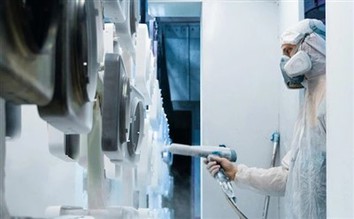


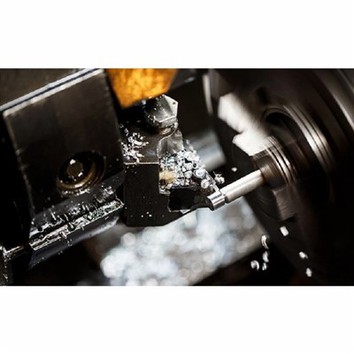


Metal fabrication is the creation of metal structures by cutting, bending and assembling processes. It is a value-added process involving the creation of machines, parts, and structures from various raw materials.
Typically, a fabrication shop bids on a job, usually based on engineering drawings, and if awarded the contract, builds the product. Large fab shops employ a multitude of value-added processes, including welding, cutting, forming and machining.
As with other manufacturing processes, both human labor and automation are commonly used. A fabricated product may be called a fabrication, and shops specializing in this type of work are called fab shops. The end products of other common types of metalworking, such as machining, metal stamping, forging, and casting, may be similar in shape and function, but those processes are not classified as fabrication.
In a nutshell, fabrication is a critical step in creating any finished metal part or structure.
Metal fabricators typically work with various raw materials that may include different types of metal such as.
- Aluminum
- Steel
- Copper
- Stainless steel
- Brass

Design
The design phase involves analyzing and adjusting the design for manufacturing. While this step is often completed solely by the customer for more standard parts, the fabrication service provider is often involved for custom projects. During this phase, the manufacturer’s design team works with the customer to determine project requirements, manufacturing approaches and areas of improvement and uses CAD software to produce designs.
Prototyping
Prototyping is a common next step, though it isn’t necessary for every project. In this phase, a rapid prototype is produced using either 3D printing or rapid sheet metal prototyping. The prototype is then analyzed for feasibility, and the customer and design team can identify any adjustments that need to be made to the design before moving on to the next stage of production.
Programming
As soon as the CAD design for the product is finalized, it is translated into programming for any computer-controlled machines that will be involved in the fabrication process. Programming is often required for automated cutting, punching and turning machines.
Fabrication
After programming is complete, the fabrication process begins. The time it takes to fabricate depends on the complexity of the part, the processes involved and the demand on the machine shop. The fabrication process itself may include various steps, including cutting, punching, folding, machining, welding and more.
Finishing
Once the fabrication process is complete, the fabrication service may finish the product. This often includes refining surfaces and edges or applying various coating options, such as powder coating.
Assembly
Some fabrication services also offer assembly, which may involve welding or electrical integrations.
The Different Kinds of Metal Fabrication


Industrial Metal Fabrication
Industrial metal fabrication is the process of integrating parts or assemblies into industrial products. Often this involves sheets or plates of metal. Fabrication is used in a wide variety of industries including aerospace, energy, material handling, automotive, and much more. As you may have already guessed, the products created for industrial purposes are typically created in larger quantities and size-e.g. large tanks, silos, and heavy machine parts.
Structural Metal Fabrication
As the name implies, structural metal fabrication involves creating structural metal parts that are used in construction and other commercial, industrial, and residential projects. I-beams are a great example of a common structural part. Steel is the most popular type of metal used in structural projects because of its remarkable strength-to-weight ratio. Other metal parts that are often fabricated for structural purposes include stairs, walkways, towers, platforms, trusses, girders, and beams.
Commercial Metal Fabrication
Take a look around any commercial facility-restaurant, retail store, public space-and you will likely see a part that has been fabricated for commercial purposes. The two most popular categories of commercial metal fabrication are decorative and ornamental. Awnings, shelves, guardrails, sinks, appliances, and conveyors are all examples of commercial metal products. Compared to industrial and structural, commercial fabricated products tend to be smaller and more precise in their purpose.
Custom Metal Fabrication
As you can see, the possibilities of metal fabrication are endless, and oftentimes projects need to be custom made to meet the unique needs of the user. These are the instances when you need a metal fabrication shop that specializes in custom work. These type of fab shops will often offer custom design services, which use CAD tools to conceptualize and specify design plans. After the product has been completely designed, the manufacturing process begins. The fabrication methods used will depend upon the individual project, specific function, materials, and other factors.

Some of the most significant types of metal fabrication technology that are now at the forefront of the fabrication process include.
CAD Software
Computer-aided design (CAD) software plays a significant role in the design of metal fabrication projects. Engineers use CAD software to develop designs, which can then be used by a fabrication company in the fabrication process. This software system allows for the production of 3D models as well as quick updates and changes to the design. CAD software also facilitates easy translations to programming language for programming fabrication machinery. Computer-aided design has made parts much easier to fine-tune, and it allows engineers to figure out crucial information instantaneously, including information on spots that may be structurally weak.
Automation
Automation has revolutionized the fabrication process in recent years. Fabrication machinery is increasingly being produced with programming capabilities, allowing the machinery to automatically complete projects to specifications with minimal human involvement. This allows for round-the-clock work, as well as improved reproducibility and precision. Automated tools are available for a wide range of processes, including cutting, welding, folding and various machining processes.
Machinery
Machinery solutions are also improving over time. Laser technology is being used in cutting processes, which allows for faster cutting through thicker materials. Other technologies, including plasma cutting and waterjet cutting, are also increasingly available. These methods are valuable for a range of different project and material types.
Metal Fabrication Processes


Shearing
Although shearing is a type of cutting, it is classified differently because of how it is done. Shearing is accomplished by using two tools-one below and one above the raw metal piece-to make a single, lengthy cut. First, the cut is initiated by pressing down on a metal piece with the upper portion of a machine (formed like a blade), which causes a fracture. Next, a cut is made by continuously applying pressure to the broken metal, and the sheared edges can then be burred as this process helps in both the forming, and cleaning up, of the edges of the material pieces after shearing.
Cutting
Cutting a workpiece to divide it into smaller portions is a relatively typical method of metal production. While sawing is still the most common way to cut, more recent techniques include laser, waterjet, power scissors, and plasma arc cutting, which uses hot plasma to cut through electrically- conductive material. Cutting can be done using a variety of instruments, including hand and power tools, as well as computer numerical control (CNC) cutters. Cutting might be the first step of a more involved fabrication process or the sole one.
Another method of cutting metal that employs a die is known as die cutting. Two traditional methods include rotary die cutting and flatbed die cutting. A rotary die uses a cylindrical die that rotates in one location to cut some particular pieces of material. In rotary die cutting, the material is cut using a rotating cylindrical die fed via a press. On other metal materials, flatbed die cutting is often employed where the die is stamped down on the metal to cut out shapes. A flatbed die, which employs far more force and a flat surface than the other methods, is intended exclusively for stronger and thicker materials.
Drawing
Drawing is a technique for stretching materials into narrower shapes and involves pushing metal through a tapered die. The source material can be heated to lessen the force required to draw it through the process although drawing can often still be done at room temperature. Deep drawing is a different sort of drawing used to shape sheet metal into cylindrical or box-shaped vessels when the depth of the finished product is equal to or greater than its radius.
Welding
Welding is the method by which several pieces of metal can be joined into one by simply applying heat and pressure. It is a well-known technique due to its adaptability and can be used to join almost any metal element with another. The common types of welding are FCAW, MIG/GMAW, SMAW, and TIG.
Flux Cored Arc Welding, or FCAW, eliminates the requirement for a secondary gas source by using a wire electrode with a core that produces shielding gas. This welding is generally identical to MIG welding (inert metal gas). However, this welding procedure prevents a metal piece from interacting with most immediate conditions by using an external gas supply with a solid wire electrode, which speeds up and improves the consistency of the process.
The most basic type of welding instrument is called SMAW, or shielded metal arc welding; it consists of an electrode stick that creates an electric arc when it comes into contact with metal. The high temperature of the arc's impact is what joins the metal pieces together.
MIG, metal inert gas welding, uses a mechanism featuring a solid wire electrode that forms an arc between this electrode and the material being worked, and the parts are then fused together.
TIG, or tungsten inert gas welding, is a type of welding that is more suited to heavy metals such as carbon steels. It uses a tungsten electrode rod to produce brief arcs. Even though it is one of the trickier types of welding and needs a highly skilled professional to use it properly, it is effective for most metal-based items.
Folding
Another metal fabrication procedure is folding, which correctly leads the raw metal material in the die. There are three primary folding techniques in manufacturing metal, the most popular of which uses a brake press (or press brake).
With a brake press, the raw metal is held between the punch and the die. Pressure is applied to the raw material and into the die, where the material takes on its desired shape. This kind of procedure is frequently used for shaping sheet metal.
A material can also be folded manually, with the use of a special machine called a folder. This machine itself is relatively simple; it consists of a flat surface with a clamping bar that secures a piece of raw material (sheet metal) and a front panel that is raised higher which causes the extended part of sheet metal to bend.
Forging
Another well-known metal fabrication method is forging, which involves striking the raw metal with a hammer or a die to give it the required shape. This process is known as "applying compressive force." Just like other metal fabrication procedures, the forging process has some variants.
- Cold forging is the original forging method and is carried out at room temperature.
- Warm forging is performed at a temperature between room temperature and one slightly below a material’s recrystallization temperature.
- Hot forging refers to forging performed at a metal’s recrystallization temperature.
- Crystallization temperature is basically the temperature at which a molten material begins to turn into a solid.
- Recrystallization is a process used to remove impurities created during crystallization and recrystallization temperatures are lower than the original crystallization temperature where the impurities were created.
Casting
Casting is pouring molten metal into a die or a mould and allowing it to cool to produce an item. It's a procedure that works almost perfectly for producing identical goods by using the same mould, making it especially helpful for mass production. There are, of course, several casting variations. For instance, in die casting, a die is used to hold molten metal rather than a mould (or mold, depending on the spelling in your region). The die is what determines the shape of the finished product under this process.
Another method is permanent mould casting, which involves "storing" the molten metal in a mould. Although the finished product is stronger than other casting techniques, removing the mould once the product has finished cooling and taking shape may be difficult, and time-consuming if it is required for additional use.
The issues of continually removing a mould could be resolved, theoretically, by a semi-permanent mould or, perhaps, a different casting. A semi-permanent mould uses a disposable core in the mould to simplify the removal process associated with permanent molds.
Sand casting will be the final metal fabrication technique discussed. In this process, sand serves as the mould material with the desired form created within it. When complex designs are required, this particular procedure takes longer than the others but is also a little more cost-effective since the mould material is so plentiful.
Extrusion
Extrusion is a slightly more challenging metal fabrication process and is used to create cylindrical components, typically used for wiring or plumbing. In this method an object is formed by pushing material through a die. This process's most typical raw material is in the form of a metal slug or cylinder. The diameter of a piece of raw material is reduced to match the size of the die's cross-section. As a result, the cavity required to form objects like wiring is created inside the material piece by being pressed around a die.
Additionally, this procedure has two variants: hot extrusion and cold extrusion.
Hot extrusion is frequently employed when working with materials like copper or aluminum since it raises the temperature of the material, increasing its likelihood of being moulded into a certain shape. In contrast, room-temperature cold extrusion is used to fabricate steel metal to increase product durability.
Machining
Machining is a procedure that removes extra material from bits of raw metal. In theory, machining is a rather straightforward procedure. However, there are variations to be found. Turning, milling, and drilling are three of the more commonly used machining techniques.
Milling removes extra material from a raw metal component using specialized multi-point cutting tools. This procedure can be carried out manually or with the aid of a CNC milling machine. Milling, in general, is more frequently employed as a secondary metal fabrication procedure.
Another type of machining is turning, which employs a specialized machine called a lathe to produce cylindrical-shaped pieces by using a cutting tool to remove portions of raw metal pieces as they rotate in one direction. This complete procedure can also be carried out manually or with a CNC turning machine; the latter is employed when the utmost precision is required.
Stamping
Stamping makes an indentation into the raw material piece rather than a hole in it. Stamping is frequently used to produce different symbols, such as letters, numbers, or images, on the surface of a material object.
Currently, mechanical stamping presses, using electricity, and hydraulic stamping presses, using pressurized liquids, are the two major types available. Most of the time, stamping is done on metal sheets with a thickness of 14 inches or less, and it produces a wide variety of goods, such as coins (coining is a process), smaller metal parts for electronics (four-slide shaping), and so on.
What to Look for in a Metal Fabrication Company?
Choosing the right metal fabrication company requires careful consideration of several factors, including:
Experience
Look for a company with a proven track record of delivering high-quality metal fabrication services. The company should have experienced and knowledgeable staff who can provide expert guidance and recommendations.
Equipment
The metal fabrication company should have various capabilities and equipment to handle various projects and requirements. This includes cutting, welding, bending, finishing equipment, and more.
Quality Control and Certifications
The metal fabrication company should have a robust quality control process to ensure the final product meets the required specifications and standards. They should also have relevant certifications, such as ISO 9001, to demonstrate their commitment to quality.
Customer Service
Choose a metal fabrication company that values customer service and communication. They should respond to your inquiries, provide regular updates on the project’s progress, and be willing to work with you to meet your needs.
Pricing and Lead Times
The metal fabrication company should provide transparent pricing and lead times for their services. They should also be willing to work within your budget and timeline requirements.
Our Certificate
The company's research and development department has obtained a total of 30 invention and utility model patents at home and abroad.

Frequently Asked Questions About Metal Fabrication Service
Q: What is Industrial Metal Fabrication?
Q: What is Structural Metal Fabrication?
Q: What is Commercial Metal Fabrication?
Q: What does metal fabrication look like in different industries?
Q: What does a metal fabrication do?
Q: Is metal fabrication the same as welding?
Q: What are the three 3 types of metal fabrication?
Q: What is a fabrication service?
Q: Is fabrication the same as welding?
Q: What does fabrication work include?
Q: What is an example of metal fabrication?
Q: Is metal fabrication hard?
Q: What is the difference between steel fabrication and metal fabrication?
Q: What are four common materials used in metal fabrication?
Q: What is the process of metal fabrication?
Q: Why choose metal fabrication?
Q: Is metal fabrication a trade?
Q: Is metal fabrication considered manufacturing?
Q: Is fabrication part of construction?
Q: How does custom metal fabrication work?
We're well-known as one of the leading metal fabrication service manufacturers and suppliers in China. If you're going to buy high quality metal fabrication service, welcome to get quotation from our factory. Also, customized service is available.
aluminum stamping, stainless steel stamping, service cnc